

كم من مدى سيارتك الكهربائية تخسر فعلاً في حرارة صيف دبي
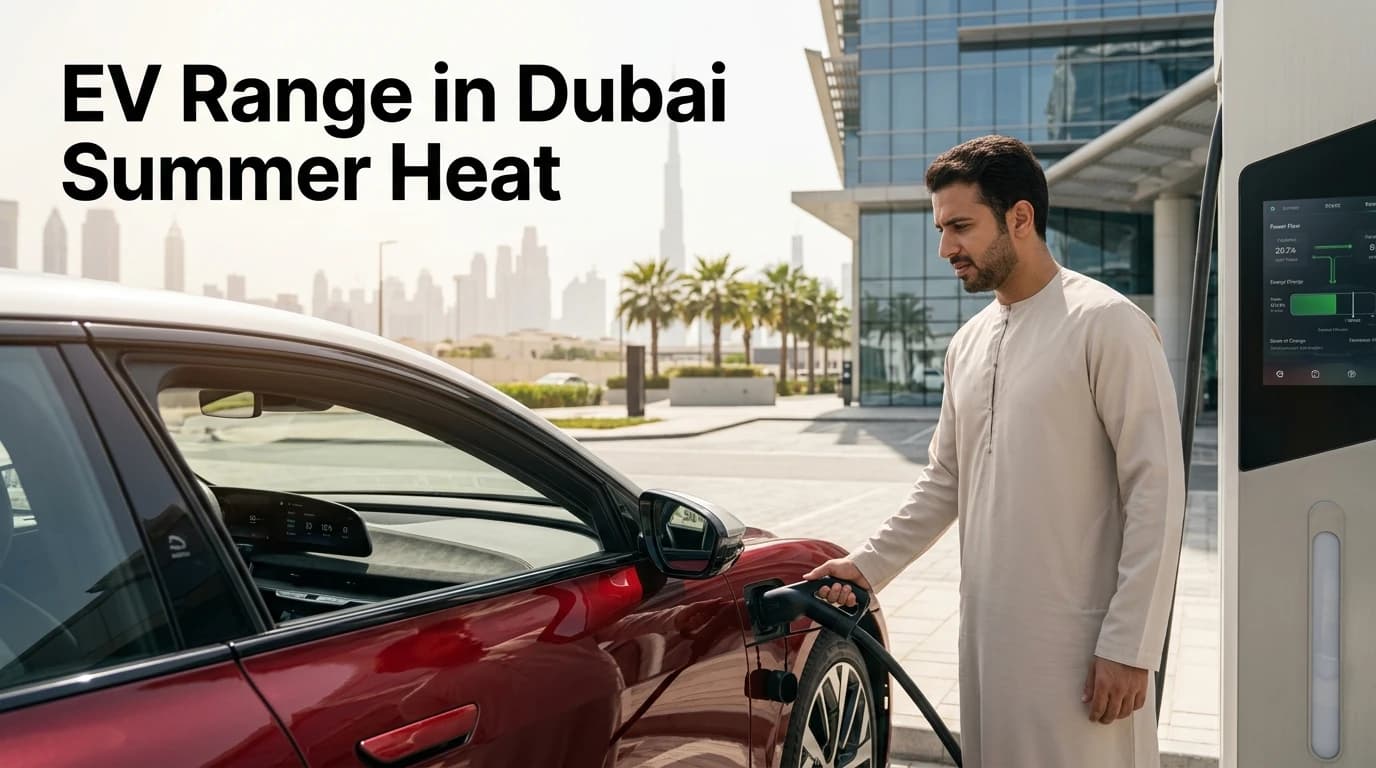
تستلم سيارة كهربائية مستأجرة في يوليو، وتلقي نظرة على لوحة القيادة التي تعرض 450 كم، ويمكن أن يُعذر منك أن تظن أن هذا الرقم لك بالكامل. لكنه ليس كذلك. بمجرد أن ترتفع درجة الحرارة الخارجية فوق 45 درجة ويكافح المكيف للحفاظ على مقصورة قابلة للعيش فيها، يصبح المدى الفعلي الذي تحصل عليه أقل بكثير من الرقم المعلن. السؤال المهم هو كم بالضبط، وهل سيتركك عالقًا بين محطات الشحن. الإجابة المختصرة هي أن عليك التخطيط لخسارة نحو ربع الرقم المعلن في يوم صيفي قاسٍ، وأحيانًا أكثر على الطريق السريع.
لماذا تأخذ الحرارة حصة أكبر مما تتوقع
أمران يستنزفان البطارية في وقت واحد خلال صيف دبي، وتأثيرهما يتراكم.
الأول هو المكيف. تبريد مقصورة كانت تُشوى تحت الشمس هو أكبر حمل إضافي تفرضه على سيارة كهربائية هنا. قاست اختبارات مستقلة خسارة مدى تبلغ نحو 17 بالمئة في يوم بحرارة 35 درجة مع تشغيل المكيف، وعند 38 درجة فأكثر يمكن أن تتجاوز الخسارة 30 بالمئة. دبي تتجاوز عادة هذه الحرارة من يونيو حتى سبتمبر، مع مواقف سيارات وطرق تشع حرارة لفترة طويلة بعد غروب الشمس.
الثاني هو البطارية نفسها. تفضل خلايا الليثيوم أيون العمل ضمن نطاق حرارة يتراوح بين 25 و40 درجة تقريبًا. إذا تجاوزت هذا النطاق، يبدأ نظام التبريد الخاص بالسيارة بالعمل لمنع ارتفاع حرارة حزمة البطارية، وهذا استهلاك إضافي من البطارية نفسها التي تحاول القيادة عليها. إذن أنت تدفع مرتين: مرة لتبريد نفسك، ومرة لتبريد البطارية. لهذا السبب تكلفك الحرارة مدى أكثر مما يوحي به تشغيل المكيف وحده. الحرارة المستمرة تُسرّع أيضًا شيخوخة حزمة البطارية، وهذا هو السبب في أنه يجب ألا تترك أبدًا السيارة تُشوى بشحنة منخفضة إن استطعت تجنب ذلك.
ماذا تفعل السيارات الكهربائية المستأجرة الشائعة هنا فعلاً
أرقام المدى المعلنة تأتي من اختبارات WLTP أو EPA التي تُجرى في ظروف معتدلة. تعامل معها على أنها سقف أعلى، لا وعد مضمون. إليك الصورة الواقعية التقريبية للسيارات الكهربائية التي يُرجح أن تُسلَّم لك في دبي خلال الصيف.
- تسلا موديل 3 Long Range. مصنفة بنحو 600 كم وفق WLTP. في يوم بحرارة 45 درجة مع تشغيل المكيف بجهد وبعض القيادة على الطريق السريع، خطط لمدى فعلي يقارب 380 إلى 430 كم.
- تسلا موديل Y. قصة مشابهة، لكنها أكثر استهلاكًا قليلاً من موديل 3 لأنها أثقل وأطول. توقع مدى يتراوح بين 350 و420 كم في ظروف الصيف الفعلية مقابل رقمها المعلن الأعلى.
- BYD Atto 3. مصنفة بنحو 420 كم وفق WLTP. القيادة الواقعية المتنوعة تخفض ذلك أصلاً إلى نحو 300 إلى 350 كم، ويوم صيفي شديد الحرارة مع تشغيل مستمر للمكيف يخفضها أكثر نحو الحد الأدنى.
تفصيل واحد لصالح BYD: تستخدم خلايا فوسفات حديد الليثيوم، التي تتحمل الحرارة والشحن المتكرر بشكل أفضل قليلاً من الكيمياء الأقدم. هذا لا يمنحك مدى إضافيًا في الشحنة الواحدة، لكنها سيارة أكثر لطفًا في التعامل معها في هذا المناخ.
النمط في جميعها متشابه. اخصم نحو 25 بالمئة من تقدير لوحة القيادة كافتراض عملي في يوم صيفي شديد الحرارة، وأكثر إذا كنت تسير بسرعة 120 كم/ساعة على شارع الشيخ زايد، لأن السرعة العالية على الطريق السريع تكلف مدى إضافيًا فوق تأثير الحرارة.
كيف تخطط لرحلة صيفية وفق الرقم الفعلي
لست بحاجة إلى الحذر لدرجة الهوس. شبكة الشحن في دبي كثيفة، بأكثر من 1,200 نقطة شحن في أنحاء المدينة اعتبارًا من 2025، تغطي المولات ومحطات الوقود والفنادق وحتى الطريق المؤدي إلى حتا. الحيلة هي التخطيط وفق المدى الصادق، لا المتفائل.
- اعتمد على أقل من نصف المدى المعلن تقريبًا كرقم تخطيط آمن للرحلات الطويلة. إذا أظهرت السيارة 450 كم، اعتبر أن 250 إلى 280 كم هي المسافة التي ستقطعها بارتياح مع تشغيل المكيف وهامش أمان، ثم اشحن قبل أن تضطر إلى ذلك.
- اشحن حتى 80 بالمئة للقيادة المدينية اليومية ولا تملأ حتى 100 بالمئة إلا قبل مرحلة طويلة من الرحلة مباشرة. الحرارة مع بطارية ممتلئة باستمرار هي أسرع طريقة لإجهاد حزمة البطارية، كما أن آخر 20 بالمئة تُشحن ببطء على أي حال.
- برّد المقصورة مسبقًا أثناء توصيلها بالشحن. تبريد السيارة بطاقة الشبكة الكهربائية قبل فصل التوصيل يعني أنك تنطلق بمقصورة باردة وبطارية ممتلئة، بدلاً من قضاء أول 20 كم فقط في محاولة خفض درجة الحرارة.
- اركن في الظل أو مبنى مغطى متى أمكن. السيارة المتروكة تحت أشعة الشمس المباشرة تفقد شحنًا لصالح نظام التبريد الخاص بها، وتجبر المكيف على العمل بجهد أكبر لحظة دخولك. أقبية المولات ومواقف الفنادق المغطاة هي صديقك.
- راقب سرعتك على الطريق السريع. خفض السرعة من 120 إلى 100 كم/ساعة في رحلة طويلة يمدد المدى بشكل ملحوظ، أكثر مما يتوقعه معظم الناس، وتأثير الحرارة يجعل هذا الفارق أكثر أهمية هنا مقارنة بمناخ أكثر برودة.
بالنسبة إلى رحلة نهارية إلى حتا أو رحلة إلى أبوظبي، هذا مهم عمليًا. مسافة الصعود إلى حتا نحو 130 كم في الاتجاه الواحد من وسط دبي، والتسلق مع تشغيل المكيف بكامل طاقته سيستهلك المدى أسرع من التنقل المستوي داخل المدينة، لذا اشحن حتى مستوى قريب من الامتلاء قبل الانطلاق واستخدم المحطات الموجودة الآن على طول ذلك الطريق.
إذا بدأت الحسابات تبدو ضيقة بالنسبة إلى رحلة صحراوية، أو جولة أطول على الساحل الشرقي، أو أي وجهة نحو حدود عمان، فإن سيارة بنزين أو هجينة تزيل التخطيط تمامًا، ويمكنك حجز إحداهما منّا في 24baba إلى جانب خيارات السيارات الكهربائية. بالنسبة إلى القيادة المدينية والتنقلات القصيرة، السيارة الكهربائية ممتعة فعلاً هنا، حتى في الصيف، طالما احترمت المدى الفعلي.
الأسئلة الشائعة — إجابات على الأسئلة المتكررة.
كم من المدى تخسره السيارة الكهربائية في صيف دبي؟
خطط لخسارة نحو 25 بالمئة أقل من الرقم المعلن في يوم صيفي شديد الحرارة، وأحيانًا أكثر. الخسارة تأتي من أمرين في آن واحد: تبريد المكيف لمقصورة حارة، وتبريد نظام السيارة الحراري للبطارية نفسها. تُظهر اختبارات مستقلة خسارة تبلغ نحو 17 بالمئة عند 35 درجة، ترتفع لتتجاوز 30 بالمئة عند أكثر من 38 درجة، ودبي تتجاوز هذه الحرارة بانتظام. سرعة الطريق السريع تزيد الخسارة أكثر فوق تأثير الحرارة.
هل الشحن في حرارة شديدة يضر بسيارة كهربائية مستأجرة؟
الشحن السريع في حرارة شديدة يضيف فعلاً إجهادًا على البطارية، لأن حزمة البطارية ترتفع حرارتها أثناء الشحن وتتقدم كيمياء الخلايا في العمر بسرعة أكبر مع الحرارة. في تأجير قصير المدة، هذا شأن الشركة أكثر منه شأنك، لكن بضع عادات تفيد الجميع: اشحن حتى 80 بالمئة للاستخدام اليومي، ولا تصل إلى 100 بالمئة إلا قبل رحلة طويلة مباشرة، وتجنب ترك السيارة بشحنة منخفضة جدًا تحت أشعة الشمس المباشرة. تدير السيارات الكهربائية المستأجرة الحديثة تبريدها بنفسها، لذا لست بحاجة إلى مراقبتها باستمرار.
هل يمكنني قيادة سيارة كهربائية مستأجرة إلى حتا أو أبوظبي في الصيف؟
نعم، كلتا الرحلتين ضمن المدى المريح مع قليل من التخطيط. اشحن حتى مستوى قريب من الامتلاء قبل الانطلاق، لأن تسلق حتا واستخدام المكيف باستمرار يستهلكان المدى أسرع من القيادة المستوية داخل المدينة. رحلة حتا نحو 130 كم في الاتجاه الواحد وباتت تضم محطات شحن على طول الطريق، وأبوظبي مغطاة جيدًا أيضًا. اعتمد على المدى الفعلي الصريح كرقم تخطيطي، واترك هامش أمان، واشحن قبل العودة بدلاً من الانتظار حتى ظهور تحذير انخفاض الطاقة.
هل أستأجر سيارة كهربائية أم بنزين لرحلة صيفية في دبي؟
بالنسبة إلى القيادة المدينية والتنقلات القصيرة، السيارة الكهربائية خيار جيد في الصيف طالما خططت وفق المدى الفعلي. أما بالنسبة إلى رحلة صحراوية، أو جولة طويلة على الساحل الشرقي، أو أي وجهة نحو حدود عمان، فإن سيارة بنزين أو هجينة تزيل تمامًا الحاجة للتخطيط للمدى والبحث عن محطات الشحن. إذا كان أسبوعك يجمع بين أيام في المدينة ورحلة كبيرة واحدة، فإن السيارة الهجينة غالبًا ما تكون الحل الوسط الأسهل.