

حدود السرعة في دبي وهامش تسامح الكاميرات
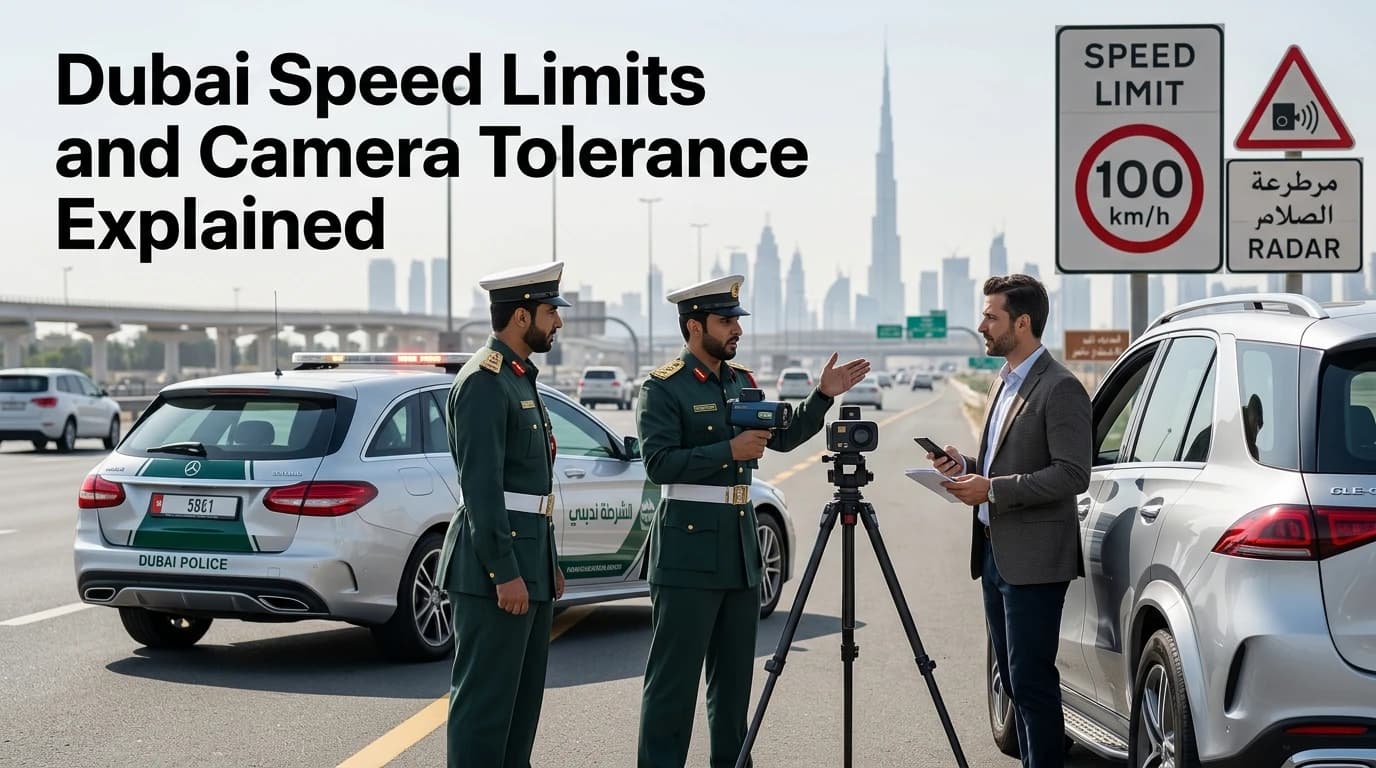
الأمر الذي يخطئ فيه معظم الزوار بشأن القيادة في دبي هو موضوع الهامش المسموح. يسمعون إشاعة بأنه يمكنهم تجاوز الحد بـ20 كم/سا دون أن ترصدهم أي كاميرا، فيتعاملون معها كقاعدة ثابتة، ثم يعبرون إلى أبوظبي ويحصلون على مخالفة عند تجاوز الحد بكيلومتر واحد فقط. إذن، إليك النسخة الصادقة: ما هي الحدود المعلنة فعليًا بحسب نوع الطريق، وكيف يعمل هامش تسامح الكاميرات حقًا، وأين يختفي هذا الهامش، وما تكلفة كل فئة من مخالفات السرعة. اضبط هذه الأمور الأربعة وستتمكن من القيادة هنا لأسبوع كامل دون أي مفاجأة سيئة في فاتورة إعادة السيارة.
اقرأ اللافتة، فالحد يتغير بسرعة
تضع دبي لافتات واضحة لحدود السرعة، وهي تتغير أكثر مما تتوقع خلال مسافة قيادة قصيرة. الرقم الموجود على اللافتة الزرقاء هو الوحيد المعتمد، ويمكن أن ينخفض من 120 إلى 60 خلال كيلومترين فقط حين يتصل الطريق السريع بتقاطع مروري.
وهذه خريطة تقريبية بحسب نوع الطريق:
- الطرق السريعة الرئيسية: يتراوح الحد على شارع الشيخ زايد بين 100 و120 كم/سا. أما طريق الإمارات (E611) وطريق الشيخ محمد بن زايد (E311) فيصل الحد المعلن على امتداداتهما المفتوحة إلى 140 كم/سا، وهي أعلى الحدود المعلنة في الدولة.
- الطرق الرئيسية الداخلية وشرايين المدينة: عادة ما بين 60 و80 كم/سا.
- الشوارع السكنية وداخل المجمعات: بين 25 و40 كم/سا، وهي منخفضة عمدًا بسبب وجود الأطفال والمشاة.
- مناطق المدارس خلال أوقات الدوام المدرسي: 40 كم/سا، ولها كاميراتها الخاصة وتطبيق أكثر صرامة.
الامتدادات التي يبلغ حدها 140 هي التي توقع السائقين في الخطأ غالبًا. تمنحك شعورًا بالاسترخاء، ثم ينخفض الحد فجأة وتكون هناك كاميرا في انتظارك على القسم المنخفض. راقب التغيرات بدلًا من الاستقرار على سرعة واحدة طوال الرحلة.
هامش الـ20 كم/سا، ولماذا لا يجب أن تثق به
وهنا الجزء الذي يسأل عنه الجميع. في معظم طرق دبي، تُضبط الرادارات الثابتة بهامش تسامح يبلغ نحو 20 كم/سا فوق الحد المعلن. ففي طريق حده 100 كم/سا، ترصد الكاميرا عادة عند نحو 121، وفي طريق حده 120 عند نحو 141. هذا الهامش حقيقي، وهو السبب الذي يجعل السكان المحليين يقودون بأريحية فوق الرقم المعلن على الطرق السريعة الكبرى.
ويأتي هذا الهامش مع تحذيرين. الأول أنه غير رسمي؛ فهيئة الطرق والمواصلات لم تَعِد يومًا بهامش محدد، والرقم غير مطبوع في أي مكان، ويمكن تقليصه أو إلغاؤه دون سابق إنذار. تعامل معه كممارسة حالية لا كحق مكتسب. والثاني أنه غير موحد؛ فمناطق المدارس ومواقع الإنشاءات وبعض الكاميرات الأحدث تعمل بهامش أضيق بكثير، وترصد عند تجاوز الحد بـ10 إلى 15 كم/سا أو أقل. العادة الأكثر أمانًا هي القيادة وفق الحد المعلن فعليًا، واعتبار الهامش وسادة أمان من زلة عابرة، لا هدفًا تسعى للوصول إليه.
اعبر إلى أبوظبي وستختفي هذه الوسادة
هذا هو الخطأ الأكثر تكلفة على الإطلاق لأي شخص يقوم برحلة يومية إلى العاصمة، أو إلى جزيرة ياس، أو باتجاه ليوا. ألغت أبوظبي هامش السرعة الخاص بها منذ عام 2018. وتُضبط رادراتها لترصد المخالفة عند تجاوز الحد المعلن بكيلومتر واحد فقط في الساعة.
فالسرعة 121 التي تمر بسلام أمام كاميرا في دبي ستكسبك مخالفة بمجرد أن تفعل الشيء نفسه على طريق في أبوظبي بحد 120. حدود الإمارة غير مُعلَّمة بأضواء تحذيرية، والعادة التي بنيتها طوال أسبوعك في دبي لا تنتقل معك. إذا كانت خطتك تشمل أبوظبي، أعد ضبط طريقة قيادتك فور مغادرتك دبي والتزم بالرقم المعلن بالضبط. وينطبق التحذير نفسه على الشارقة والإمارات الشمالية، حيث تتفاوت الهوامش، ومن الأفضل أن تفترض أن الحد يعني الحد فعلًا.
ما التكلفة الفعلية لمخالفة السرعة
المخالفات اتحادية، لذا تنطبق المبالغ أدناه في جميع أنحاء الدولة، وترتفع بشكل حاد كلما زاد تجاوزك للحد المسموح. وهذه هي الفئات الحالية بحسب مقدار تجاوزك للحد المعلن.
- حتى 20 كم/سا فوق الحد: AED 300.
- من 20 إلى 30 كم/سا فوق الحد: AED 600.
- من 30 إلى 40 كم/سا فوق الحد: AED 700.
- من 40 إلى 50 كم/سا فوق الحد: AED 1,000.
- من 50 إلى 60 كم/سا فوق الحد: AED 1,500، بالإضافة إلى 6 نقاط سوداء وحجز المركبة لمدة 15 يومًا.
- أكثر من 60 كم/سا فوق الحد: AED 2,000، بالإضافة إلى 12 نقطة سوداء وحجز المركبة لمدة 30 يومًا.
- أكثر من 80 كم/سا فوق الحد: AED 3,000، بالإضافة إلى 23 نقطة سوداء وحجز المركبة لمدة 60 يومًا.
بعض هذه الأرقام يستحق نظرة ثانية. فالقفزة من الفئات المنخفضة إلى الفئات الجسيمة هي حيث تبدأ النقاط السوداء والحجز بالتطبيق، و24 نقطة سوداء خلال عام واحد تكفي لإيقاف الرخصة. وفي حالة السيارة المستأجرة، تمثل فئات الحجز صداعًا حقيقيًا، لأن السيارة مسجلة باسم شركة التأجير وأنت من عليه ترتيب الإفراج عنها وتحمّل التكلفة. الفئات الرخيصة تؤلم المحفظة، أما الفئات العليا فقد تنهي رحلتك بأكملها.
ليست كل الكاميرات واضحة كما تظن
الكاميرات الثابتة سهلة التمييز. فهي مثبتة على أعمدة أو هياكل معلقة فوق الطريق، وغالبًا ما تسبقها لافتة تحذير صغيرة على بعد نحو مئة متر، وكثير منها يستخدم الآن الأشعة تحت الحمراء دون ومضة ظاهرة تنبهك. وهذه عادة هي الكاميرات التي ينطبق عليها الهامش المسموح.
أما البقية فأقل قابلية للتوقع. تعمل الرادارات المتنقلة من سيارات دورية متوقفة أو أجهزة محمولة، وتظهر في مناطق مؤقتة ومشاريع جديدة وطرق تتغير حركتها المرورية باستمرار. ومنذ مارس 2025، باتت الكاميرات الذكية ترصد ما هو أبعد بكثير من السرعة، بما في ذلك الاقتراب الزائد من السيارة الأمامية، واستخدام الهاتف وعدم ربط حزام الأمان والانضباط في المسارات، وكل ذلك من جهاز واحد. ولمناطق المدارس نظام رصد خاص بها، بما في ذلك رادارات مثبتة على حافلات المدارس ترصد السائقين الذين يتجاهلون لافتات التوقف. والفكرة بسيطة: لا يمكنك الاعتماد على رصد الكاميرا بعينك، لذا قُد وكأن كاميرا تراقبك دائمًا، لأنها غالبًا تفعل بالفعل.
وبالنسبة للزوار، هناك تعقيد عملي إضافي فوق كل ذلك. السيارة المستأجرة ليست مرتبطة بملصق سالك أو بتنبيه مخالفات على هاتفك، لذا تصل مخالفة السرعة أولًا إلى شركة التأجير ثم تُحمَّل على حسابك، غالبًا مع رسم إداري، وأحيانًا بعد عودتك إلى بلدك. وعند حجز سيارة معنا في دبي، اسأل عن آلية التعامل مع المخالفات وعن البطاقة التي يُحجز عليها مبلغ التأمين، حتى لا تتحول ومضة كاميرا واحدة قرب نهاية رحلتك إلى رسوم مفاجئة بعد أسابيع. يمكنك ترتيب هذا الأمر في 24baba قبل أن تستلم مفاتيح السيارة.
الأسئلة الشائعة — إجابات على الأسئلة المتكررة.
هل هامش السرعة البالغ 20 كم/سا في دبي قاعدة رسمية؟
لا. الهامش البالغ نحو 20 كم/سا في معظم طرق دبي هو ممارسة معمول بها منذ فترة طويلة، وليس قاعدة معلنة من هيئة الطرق والمواصلات. إنه غير مكتوب في أي لائحة، ولا ينطبق في كل مكان، ويمكن تضييقه أو إلغاؤه دون أي إعلان مسبق. تستخدم مناطق المدارس وبعض الكاميرات الأحدث هامشًا أضيق بكثير بالفعل. التزم بالحد المعلن على اللافتة، واعتبر الهامش مجرد حماية من زلة عابرة لا هدفًا تسعى إليه.
هل ينطبق هامش دبي في أبوظبي أيضًا؟
لا، وهذا ما يوقع كثيرًا من السائقين في الخطأ. ألغت أبوظبي هامشها في عام 2018، وترصد كاميراتها أي تجاوز للحد بمقدار كيلومتر واحد فقط في الساعة. فالسرعة التي تمر دون رصد من كاميرا في دبي ستُغرَّم عليها في أبوظبي. إذا كنت متجهًا إلى العاصمة أو إلى أي مكان خارج دبي، اضبط سرعتك على الرقم المعلن بالضبط فور عبورك الحدود بين الإمارتين.
من يدفع مخالفة السرعة إذا كنت أقود سيارة مستأجرة؟
أنت من يدفعها. تُسجَّل المخالفة على المركبة، فتصل أولًا إلى شركة التأجير التي تحمّلها بعد ذلك على حسابك، غالبًا مع رسم إداري وأحيانًا بعد انتهاء رحلتك بالفعل. اسأل شركة التأجير عن آلية التعامل مع المخالفات ومبلغ التأمين المحجوز قبل أن تنطلق بالسيارة، حتى تعرف ما تتوقعه إذا رصدتك إحدى الكاميرات.