

Driving in Dubai summer heat: how to keep the car and yourself safe
Open a car door at 2pm in July and the heat hits you like a wall. The steering wheel is too hot to hold, the seat belt buckle could brand you, and the dashboard reads 60 degrees before the engine even starts. Dubai summers are not gentle on cars or the people in them, and inland spots like Sweihan touched 51.8C last August. If you are driving here between June and September, a few habits keep the trip comfortable and the car out of trouble. Here is what actually matters in this climate, and what you can skip.
Where you park decides how the rest goes
Shade is the single biggest favour you can do yourself and the car. A vehicle left in direct sun bakes from the inside, and the dashboard, wheel and seats can climb past 70C while the cabin air sits well above the 45C outside. Underground parking at the malls is the obvious win, and most of it is free for the first few hours. Multi-storey car parks are the next best thing.
When there is no covered option, point the windscreen away from the afternoon sun and use a reflective sunshade. The folding accordion type costs AED 30 to 60 and drops the dashboard temperature noticeably. A cheap towel over the wheel and a cracked window, the gap small enough that no hand fits through, both help more than people expect.
Cooling the cabin without melting first
Resist the urge to jump in and crank the AC to max with the windows up. The trick is to dump the trapped hot air first. Open all the doors for thirty seconds, or open the windows and drive slowly for the first minute so the cabin air flushes out. Then close up, switch the AC to fresh air, and only move to recirculate once the inside is cooler than the outside.
Recirculation is what gets a Dubai cabin properly cold, because the system stops fighting the 48C air outside and chills the same air over and over. Aim the vents up rather than straight at your face, and give it two or three minutes before you expect real relief. On a working system that is all it takes.
Tyres are where the heat gets dangerous
This is the part people underestimate. Hot asphalt in Dubai can reach 70 to 80C on a summer afternoon, and that superheated surface pushes tyre pressure up as you drive. A tyre that is already worn, old, or over-inflated is the one that lets go at speed, usually on Sheikh Zayed Road when you least want it.
A few things keep you off the hard shoulder:
- Check pressure when the tyres are cold, first thing in the morning, and set it to the figure on the sticker inside the driver's door jamb. That number already accounts for heat expansion.
- Do not let air out to "compensate" for the heat, and do not pump them up either. Under-inflated tyres flex, build heat, and fail faster than correctly set ones.
- Look at the sidewalls for cracks, bulges or blisters. A bulge is a weak spot waiting to blow, and Dubai heat finds it fast.
- Mind the age and tread. The UAE legal minimum tread is 1.6mm, but replace well before that, and treat tyres older than about five years with suspicion no matter how they look.
If a tyre does blow at speed, hold the wheel straight, ease off the accelerator rather than slamming the brakes, and let the car slow before steering gently onto the shoulder.
Never leave a child or a pet in the car. Not for a minute
A parked car in a Dubai summer turns into an oven within minutes, and the inside temperature can climb far past the already brutal outside air. Every year brings tragedies that started as a quick errand.
The law treats this seriously. Leaving a child unattended in a vehicle falls under negligence in the Wadeema child rights law, carrying a fine that can reach AED 5,000, rising to around AED 10,000 where life is endangered. In the worst cases the penalty extends to a heavy fine and a prison term. The same care applies to pets, who suffer heatstroke even faster than people. There is no errand short enough to justify it. Take the child or the dog with you, every time.
When the engine starts to overheat
Heat-related engine failure is one of the most common reasons cars get stranded here in summer. Watch the temperature gauge. If the needle climbs toward the red, or you see steam or smell something hot and sweet, act before it gets worse.
- Turn off the AC and turn the heater on full. It feels insane at 48C, but it pulls heat away from the engine and buys you time.
- Pull over somewhere safe as soon as you can, and switch the engine off.
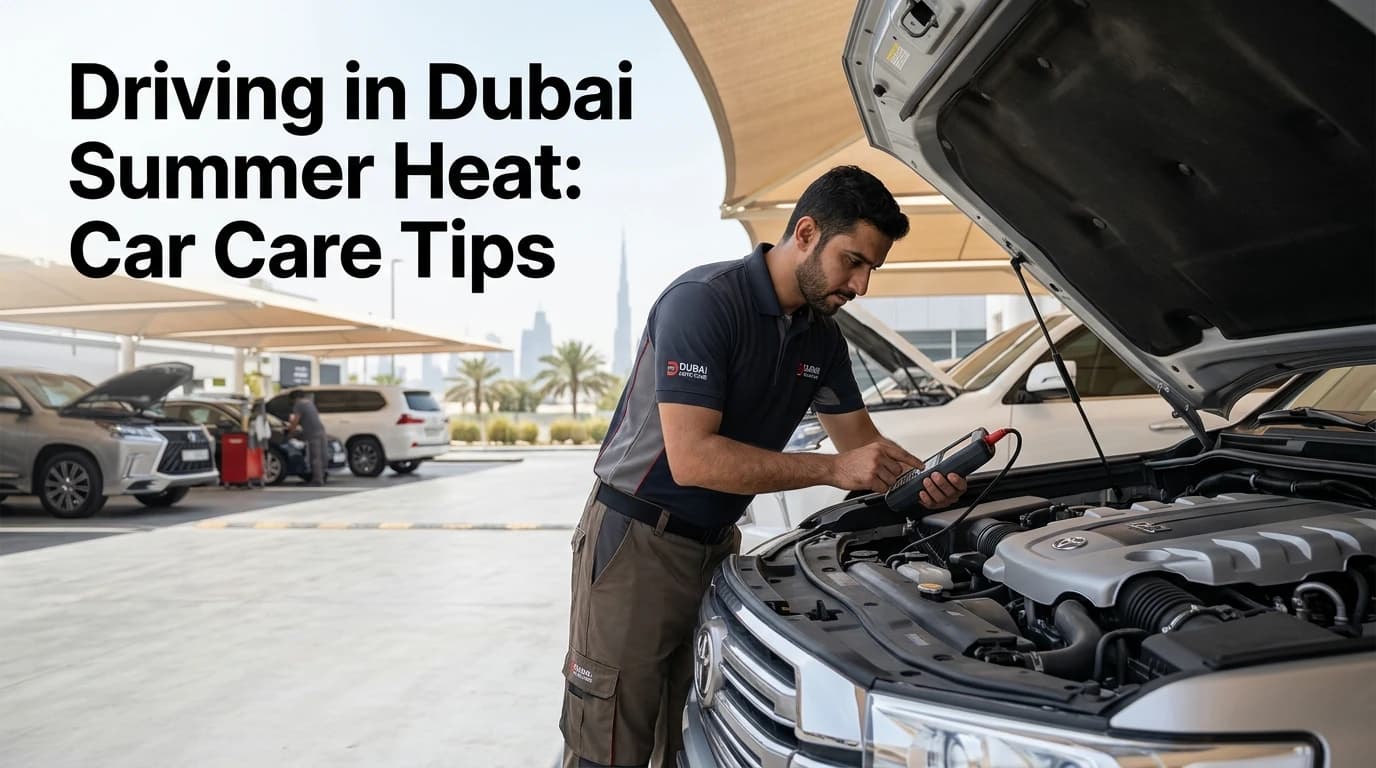
- Pop the bonnet to let heat escape, but do not open the radiator cap while it is hot. The pressurised coolant can scald you badly.
- Let it cool for at least fifteen to twenty minutes before checking coolant, and call for help if the level is low or the problem repeats.
Driving on with a hot engine is how a cheap fix becomes a new engine. When in doubt, stop.
Look after yourself, not just the machine
The driver matters too. Dehydration creeps up fast in this heat and dulls your reactions before you notice. Keep water in the car, though not left baking in the sun, and drink before you feel thirsty. Sunglasses cut the glare off the asphalt, and a quick break on a long inland drive beats pushing through while drowsy. If you are heading somewhere remote, tell someone your route and keep your phone charged.
If you are renting, the maintenance is our problem
One real advantage of renting over owning in a Dubai summer is that the heavy upkeep is not on you. A rental car should arrive with tyres in good condition, fresh coolant, and an AC that actually copes with 50C, because keeping the fleet road-ready in this climate is the company's job, not yours. If anything feels off, a weak AC, a soft tyre, a warning light, you report it and swap the car rather than paying for the repair.
That is the case we would make for it. For a summer of driving here you want a car that handles the heat without drama, and you can rent a well-maintained one with strong air conditioning from 24baba. Then the only thing left to manage is where you park.
الأسئلة الشائعة — إجابات على الأسئلة المتكررة.
How hot does a parked car get in Dubai summer?
A car left in direct sun can reach well over 70C on the dashboard and steering wheel, while the cabin air sits far above the 45C to 50C outside. Surfaces heat up within minutes, which is why the wheel and seat belt buckle can burn you. Shade and a windscreen sunshade make a real difference. This is also exactly why leaving a child or pet inside, even briefly, is so dangerous.
What tyre pressure should I run in summer?
Use the figure printed on the sticker inside the driver's door jamb, set when the tyres are cold. That number already accounts for the pressure rise that comes with heat, so you do not need to add or release air to "adjust" for summer. Letting air out actually raises the blowout risk, because under-inflated tyres flex and overheat. Check the pressure first thing in the morning before the tyres warm up.
What should I do if my car overheats on the road?
Turn off the AC, switch the heater to full to draw heat from the engine, and pull over safely as soon as possible. Switch the engine off and raise the bonnet, but never open the radiator cap while it is hot, since the coolant can scald you. Let it cool for fifteen to twenty minutes before checking the coolant level. If the level is low or it overheats again, call for assistance rather than driving on.
Is it illegal to leave a child alone in a car in the UAE?
Yes. Leaving a child unattended in a vehicle is treated as negligence under the Wadeema child rights law, with fines that can reach AED 5,000 and around AED 10,000 where life is endangered. The most serious cases carry far larger fines and possible imprisonment. Beyond the law, a parked car heats to deadly temperatures within minutes in summer. Always take the child with you, however short the stop.