

Excess and deductible on Dubai rentals, explained
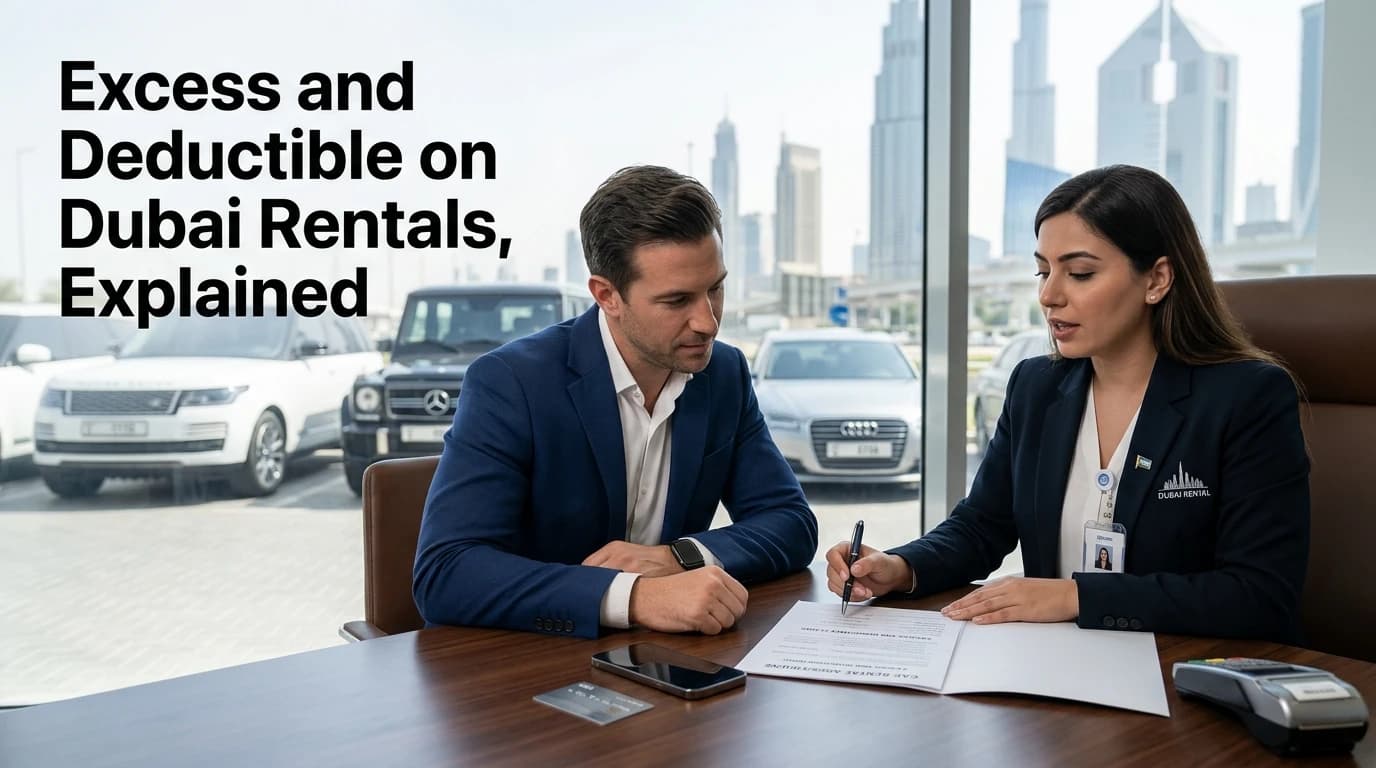
The cheapest rate on a comparison site usually hides one number that decides how much an accident really costs you. That number is the excess. It is the amount you pay out of your own pocket if the car gets damaged, even though the rental "includes insurance". People skim past it at booking and then meet it at the worst moment, standing at the desk after a scrape, watching a chunk of their deposit disappear.
So here is what excess means on a Dubai rental, how it sits next to your deposit and the basic CDW cover, and whether paying to wipe it out is worth the daily fee.
What excess actually is
Excess, sometimes called the deductible, is your share of any damage or theft claim. Your rental comes with Collision Damage Waiver as standard, which sounds like full protection but is not. CDW caps your liability. It does not erase it. The cap is the excess.
A worked example helps. You book an economy hatchback with an excess of AED 1,500. Someone clips the bumper in a mall car park and the repair comes to AED 4,000. The CDW covers everything above your excess, so the company pays AED 2,500 and you pay AED 1,500. If the repair had come to AED 1,200, you would pay the full AED 1,200, because it sits under the cap. Excess is a floor on what you owe, not a fixed charge you always pay.
You only meet it if there is a claim. Return the car clean and undamaged and it never touches you.
Typical excess by car class
The excess scales with how expensive the car is to fix. In Dubai right now the rough bands look like this.
- Economy and small hatchbacks: around AED 1,500
- Mid-size sedans and compact SUVs: AED 2,000 to AED 3,000
- Larger SUVs and premium cars: AED 3,000 to AED 5,000
- Luxury, sports and supercars: AED 5,000 and well beyond, sometimes tens of thousands
Always ask for the exact figure before you sign, because the same model can carry a different excess at two different companies. The number on your agreement is the one that counts.
How excess connects to the deposit
This is where most of the confusion lives, because the deposit and the excess are two different things that touch each other.
The security deposit is a temporary hold on your credit card, not a charge. The company blocks an amount, often between AED 1,000 and AED 5,000 depending on the car, and that money stays frozen but yours. If you damage the car, the excess is the most they can take from that hold for the repair. So a AED 2,000 deposit and a AED 2,000 excess can line up almost exactly, which is why people confuse them. The deposit is the pot. The excess is the rule for how much of the pot a single claim can drain.
The hold also covers Salik tolls and traffic fines that arrive after you hand the keys back, which is why a clean rental can still see the deposit held for a while. Under Dubai consumer protection rules it should be released within 30 days, though most companies wait two to three weeks for fines and tolls to clear first.
What the excess does not save you from
Even drivers who paid for cover get caught here. Standard CDW, and the excess that comes with it, typically excludes the parts of the car most likely to get hurt on a real trip:
- Tyres, wheels and rims
- Windscreen and glass
- The underside of the car
- Lost keys and missing documents
- Anything that happens with an unauthorised driver at the wheel, or after drinking
Drive out to the dunes near Al Qudra or take a rough desert shoulder and underbody and tyre damage is exactly what you risk, and it often falls outside the waiver entirely. If your trip involves anything off smooth tarmac, ask specifically whether tyres, glass and underbody are covered, because reducing the excess does nothing for damage the policy never covered.
Reducing the excess: what zero costs
You can buy the excess down, usually to zero, through an upgrade the desk calls Super CDW, SCDW or full cover. Accept it and your liability for damage to the car drops to nothing, so a scrape that would have cost you AED 1,500 now costs you AED 0.
The price depends on the car. For economy and mid-range vehicles, zero-excess cover runs roughly AED 30 to AED 80 a day. On luxury cars it climbs to AED 100 to AED 250 a day, and on sports and supercars it can reach AED 200 to AED 500. Some plans do not take the excess all the way to zero, dropping it to maybe AED 300 to AED 500 instead, so check whether you are buying true zero or just a lower number.
Whether it is worth it comes down to the trip. For a week of careful city driving in a cheap hatchback, an extra AED 50 a day means paying around AED 350 to remove a AED 1,500 risk you may never trigger, which is a personal call. For an SUV with a AED 5,000 excess on a long trip with mountain roads and busy parking, buying the excess down is usually the calmer money.
One more option worth knowing. Standalone rental excess insurance from a third party often costs less per day than the desk waiver and refunds you the excess after a claim. The catch is you pay the rental company first and claim it back later, so you still need the funds available in the moment.
If you would rather keep it simple, we can set the cover level with you when you book one of our cars in Dubai, so you reach the desk already knowing your excess instead of deciding under pressure.
FAQ — Common Questions Answered.
Is the excess the same as the deposit?
No, though they often look alike. The deposit is a temporary hold on your card that the company can dip into for damage, fines or tolls. The excess is the maximum they can take from that hold for a single damage claim. A clean return means the deposit comes back untouched and the excess never applies.
Do I pay the excess if nothing happens to the car?
No. The excess only comes into play when there is a damage or theft claim. Return the car in the same condition you collected it and you owe nothing toward excess, and your deposit is released in full once any fines and tolls have cleared.
Does paying for zero excess cover everything?
No. Zero-excess cover removes your liability for the kinds of damage CDW already covers, but it usually still excludes tyres, windscreen, glass and underbody damage. If your trip risks any of those, ask the company directly whether those parts are included before you assume you are fully protected.
Why is the excess so high on luxury cars?
Because the parts and repairs cost far more. A bumper or panel on a supercar can run into tens of thousands of dirhams, so the company sets the excess to match the real cost of fixing it. That is also why the daily fee to buy the excess down is much higher on those cars.