

القيادة في الصحراء قرب دبي: أين ومع أي سيارة
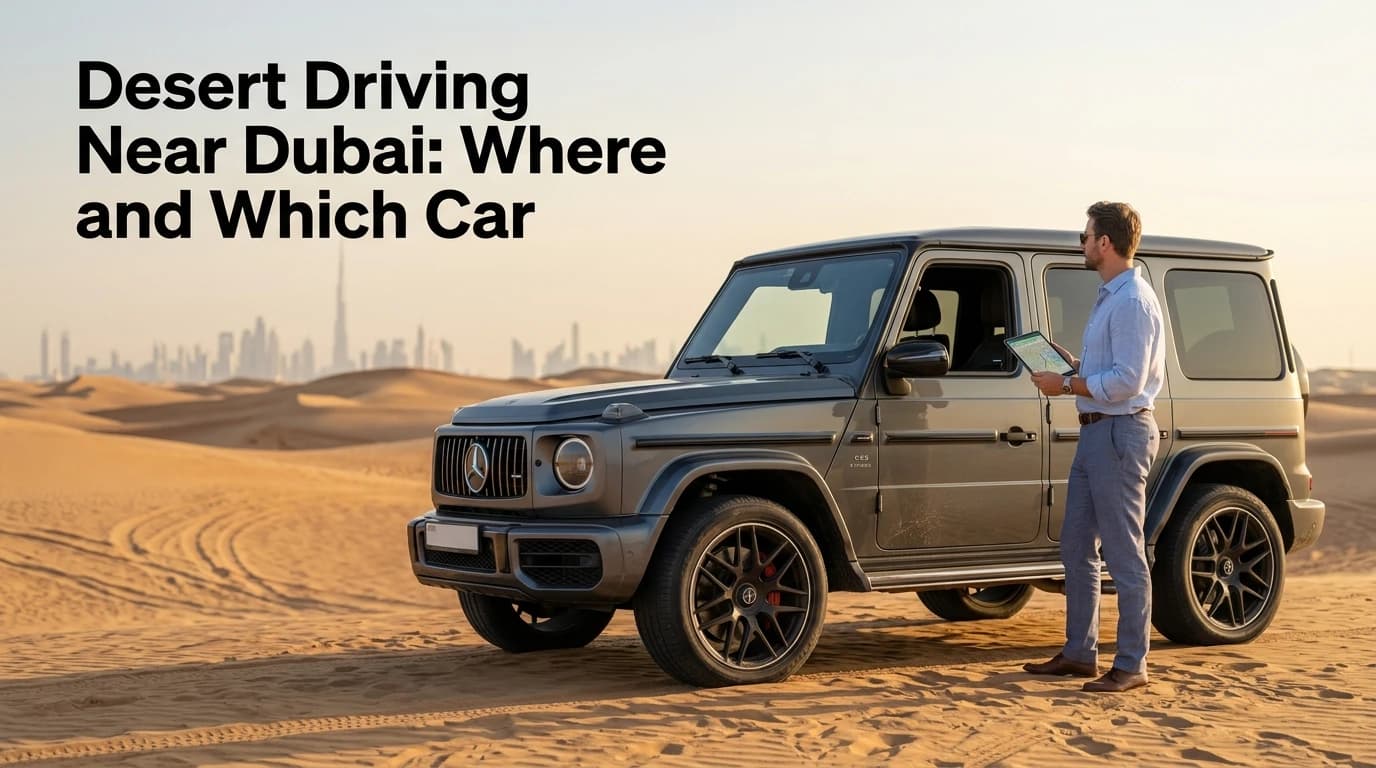
أكثر الأخطاء تكلفة في الكثبان الرملية يحدث قبل أن يلمس الناس الرمال أصلاً. يأخذون سيارة كروس أوفر مستأجرة خارج الطريق المعبّد، فتتعطل أو يتعرضون لعطل، ثم يكتشفون أن التأمين لا يغطي درهماً واحداً من ذلك. لذا دعني أضع التحذير في مكانه الصحيح، في المقدمة تماماً، ثم أخبرك أين تقود وبأي سيارة إن أردت القيام بذلك بالطريقة الصحيحة.
هذا الدليل موجه لكل من يفكر في توجيه سيارته نحو الكثبان قرب دبي، سواء كنت زائراً لأسبوع أو مقيماً هنا منذ سنوات ولم تجرب ذلك بعد. الصحراء واحدة من أفضل الأشياء التي تمنحك إياها الحياة هنا فعلاً. لكنها أيضاً لا ترحم بطرق لا تُعدّك لها المدينة أبداً.
تأمين سيارتك المستأجرة لا يغطي الرمال في الغالب
هذا هو الجزء الذي يوقع الناس في الخطأ. "التأمين الشامل" على سيارة مستأجرة عادية يتوقف فور مغادرتك الطريق المعبّد. القيادة خارج الطرق مستثناة افتراضياً، وهذا يشمل الرمال والمسارات الحصوية والطرق الصحراوية غير المعلَّمة. توضح شركة Avis ذلك بحروف واضحة في شروطها، وتقول معظم الشركات المحلية الأمر نفسه في التفاصيل الدقيقة: إن قدت خارج الطريق فأنت مسؤول شخصياً عن أي ضرر.
هذا مهم لأن أضرار الصحراء نادراً ما تكون رخيصة. تتسلل الرمال إلى أماكن لا ينبغي أن تصل إليها، والسيارة العالقة قد يحترق ناقل حركتها، والانقلاب على كثيب يعني حديثاً عن سيارة خردة. وإذا لم يكن تأمين الحوادث (CDW) سارياً، تقع الفاتورة على بطاقتك دون سقف.
الحل ليس معقداً، لكنه يحتاج إلى قصد وتخطيط. تحتاج إلى سيارة مستأجرة مع تغطية صريحة للقيادة خارج الطرق أو في الصحراء، متفقاً عليها كتابياً قبل أن تقود. لا تفترض أن سيارة الدفع الرباعي تأتي بهذه التغطية تلقائياً. فسيارة لاند كروزر بعقد قياسي غير مؤمَّنة في الرمال تماماً مثل سيارة هاتشباك. اطرح السؤال مباشرة، واحصل على إجابة موثقة في العقد، واحتفظ بالأوراق.
أين يمكنك الذهاب فعلاً
لست بحاجة إلى القيادة حتى السعودية لتجد كثباناً حقيقية. هناك أربع مناطق تستحق المعرفة، وهي ليست متشابهة أو قابلة للتبديل.
القدرة ومرموم، لأول مرة تخوضها
إن لم تقد على الرمال من قبل، ابدأ من هنا. تقع القدرة داخل محمية مرموم الصحراوية، على بعد نحو 40 دقيقة جنوب وسط المدينة، وهي أرقّ مدخل للتجربة قرب المدينة. الكثبان منخفضة ومتسامحة، والمنطقة مسطحة ومفتوحة، وجزء كبير منها يمكن الوصول إليه عبر مسارات ممهَّدة لا رمال ناعمة.
كما أنها أسهل مكان للتعلم دون جمهور يراقبك. يمكنك التدرب على الأساسيات، والتعرف على سلوك السيارة عندما يختفي التماسك، والرجوع للخلف من بقعة رملية ناعمة دون أن تكون على بعد أميال من أي أحد. التزم بالمسارات الموجودة هنا، فالمنطقة محمية طبيعية والقيادة الحرة غير المصرح بها مقيدة فيها.
البدية، المعروفة أيضاً بـ"بيغ ريد"
بيغ ريد هي الموقع الذي يصوّره الجميع. تمتد على طول طريق دبي حتا، E44، على بعد نحو 50 إلى 60 دقيقة من وسط المدينة، وكثبانها الحمراء الشاهقة خطوة حقيقية أعلى من القدرة. هنا تكتسب "تطعيس الكثبان" معناها الفعلي.
هذا ليس مكاناً للمبتدئين. التسلقات حادة، والانحدارات أكثر حدة، والخطأ عند قمة رملية ناعمة هو ما يجعل السيارات تنقلب على جانبها. كثيرون يقودون في بيغ ريد لأول مرة، لكنهم يفعلون ذلك برفقة شخص ذي خبرة في السيارة أو ضمن قافلة، لا بمفردهم بدافع عابر.
ليوا، للمحترفين فقط
ليوا فئة مختلفة تماماً. تقع في أبوظبي، على بعد نحو 250 كيلومتراً من دبي، فهي رحلة مخطَّط لها وليست خرجة بعد الظهر، وتضم أكبر الكثبان الرملية في شبه الجزيرة العربية. يرتفع بعضها إلى مئات الأمتار.
هذه أرض للخبراء. الحجم خطير فعلاً إن لم تكن تعرف ما تفعله، والإنقاذ بعيد عن أي مساعدة. إن كنت تتساءل عما إذا كنت جاهزاً لليوا، فأنت لست كذلك بعد. تدرّج نحوها بالخبرة.
أي سيارة: دفع رباعي حقيقي، ولا أقل من ذلك
سيارة الكروس أوفر ليست سيارة صحراء. سيارات نيسان قشقاي وتويوتا راف فور وما شابهها من السيارات شبه الوعرة مصممة للجزر الدوّارة المبتلة والممرات الحصوية، لا لتسلق كثيب. تفتقر إلى الخلوص الأرضي الكافي، والدفع الرباعي الحقيقي، والتروس المنخفضة (low-range) التي تتطلبها الرمال، ودفعها إلى كثبان ناعمة هو الطريقة المضمونة لحرق ناقل الحركة أو التعطل في مكانها.
ما تحتاجه هو سيارة دفع رباعي بهيكل صلب (body-on-frame) مزودة بتروس منخفضة قابلة للاختيار. في هذه المنطقة يعني ذلك تويوتا لاند كروزر أو نيسان باترول أو ما يماثلهما من الفئة نفسها. التروس المنخفضة هي الجزء الأهم. فهي تمنح السيارة عزماً بطيئاً وثابتاً، وهو تحديداً ما تحتاجه للزحف فوق الرمال الناعمة دون أن تدور العجلات في مكانها وتغوص.
لذا فإن الإجابة الصادقة على سؤال "أي سيارة" قصيرة. إن لم تكن السيارة مزودة بتروس منخفضة، أبقها على الطريق المعبّد. أما للكثبان، فإن لاند كروزر أو باترول أوتوماتيكية مستأجرة مع تغطية صحيحة للقيادة خارج الطرق هي الخيار المنطقي، ويمكنك استئجار واحدة مجهّزة للرمال منا في 24baba. تواصل معنا في 24baba لترتيب السيارة والتغطية الخاصة بالقيادة خارج الطرق معاً قبل انطلاقك.
أساسيات السلامة التي تُبعدك عن المتاعب
معظم مشاكل الصحراء تنشأ من تجاوز عدد قليل من الخطوات البسيطة. لا شيء من هذه الخطوات اختياري.
- أنقص ضغط إطاراتك قبل الدخول إلى الرمال الناعمة. اخفضها إلى نحو 15 إلى 18 رطلاً لكل بوصة مربعة للرمال الجافة العادية، وأقل قليلاً، ربما 12 إلى 15، للكثبان الأكثر نعومة. الضغط المنخفض يوسّع مساحة تلامس الإطار فتطفو السيارة بدل أن تغوص. احمل معك ضاغط هواء.
- أعد نفخ الإطارات قبل العودة إلى الطريق. هذه الخطوة ينساها الناس، وتجاهلها خطير فعلاً. الإطارات بضغط الرمال على أسفلت ساخن ترتفع حرارتها بسرعة وقد تنفجر. انفخها فور وصولك إلى سطح معبّد.
- لا تذهب بمفردك أبداً. قُد ضمن قافلة من سيارتين على الأقل. السيارة العالقة تُنقذ بسهولة بسيارة ثانية وحبل جر، لكنها تتحول إلى مشكلة طويلة وحارة ومرعبة دون ذلك.
- احمل معدات الإنقاذ والماء. مجرفة، وحبل جر، وماء أكثر مما تظن أنك بحاجة إليه. علم رملي على السيارة يساعد الآخرين على رؤيتك فوق قمة كثيب قبل فوات الأوان.
- أخبر أحداً بوجهتك. تختفي إشارة الهاتف في الكثبان. يجب أن يعرف أحدهم مسارك والوقت التقريبي لعودتك.
افعل هذه الأمور الخمسة وستتجنب معظم ما قد يحدث من أخطاء. تجاهلها وستعلّمك الصحراء عاجلاً أم آجلاً لماذا وُجدت.
الأسئلة الشائعة — إجابات على الأسئلة المتكررة.
هل يمكنني أخذ سيارة مستأجرة عادية إلى الرمال قرب دبي؟
لا، ولا يجب أن تحاول ذلك. السيارة المستأجرة العادية غير مناسبة ميكانيكياً للرمال وغير مؤمَّنة في اللحظة التي تغادر فيها الطريق. تحتاج إلى سيارة دفع رباعي حقيقية بتروس منخفضة، مستأجرة مع تغطية صريحة للقيادة خارج الطرق أو في الصحراء مدرجة في العقد. أي أقل من ذلك يجعلك مسؤولاً عن التكلفة الكاملة لأي ضرر.
هل يغطي التأمين الشامل على سيارة مستأجرة القيادة في الصحراء؟
في معظم الحالات تقريباً، لا. تستثني تغطية CDW القياسية والتأمين "الشامل" الاستخدام خارج الطرق افتراضياً، بما يشمل الرمال والمسارات غير المعلَّمة. عليك ترتيب تغطية خاصة للقيادة خارج الطرق أو في الصحراء والتأكد منها كتابياً قبل أن تقود. لا تفترض أن استئجار سيارة دفع رباعي يشمل ذلك تلقائياً، فالسيارة والتغطية أمران منفصلان تماماً.
أين يجب أن يذهب من يجرب القيادة الصحراوية لأول مرة؟
القدرة، داخل محمية مرموم الصحراوية على بعد نحو 40 دقيقة جنوب وسط دبي، هي الأنسب للبداية. الكثبان منخفضة، والأرض مفتوحة، وجزء كبير منها يقع على مسارات ممهَّدة. بيغ ريد على طريق E44 هي الخطوة التالية بعد إتقان الأساسيات، وليوا في أبوظبي مخصصة لأصحاب الخبرة فقط.
ما ضغط الإطارات الذي يجب أن أستخدمه في الرمال؟
بالنسبة للرمال الجافة المعتادة قرب دبي، أنقص ضغط إطاراتك إلى نحو 15 إلى 18 رطلاً لكل بوصة مربعة، وأقل قليلاً للكثبان الناعمة جداً. الضغط المنخفض يوسّع مساحة تلامس الإطار فتسير السيارة فوق الرمال بدل الغوص فيها. تذكر فقط إعادة النفخ إلى الضغط الطبيعي قبل العودة إلى الأسفلت، لأن الطرق الساخنة والإطارات اللينة تشكّل خطر عطل حقيقياً.