
BYD أم Tesla: أي سيارة كهربائية تستأجر في دبي؟
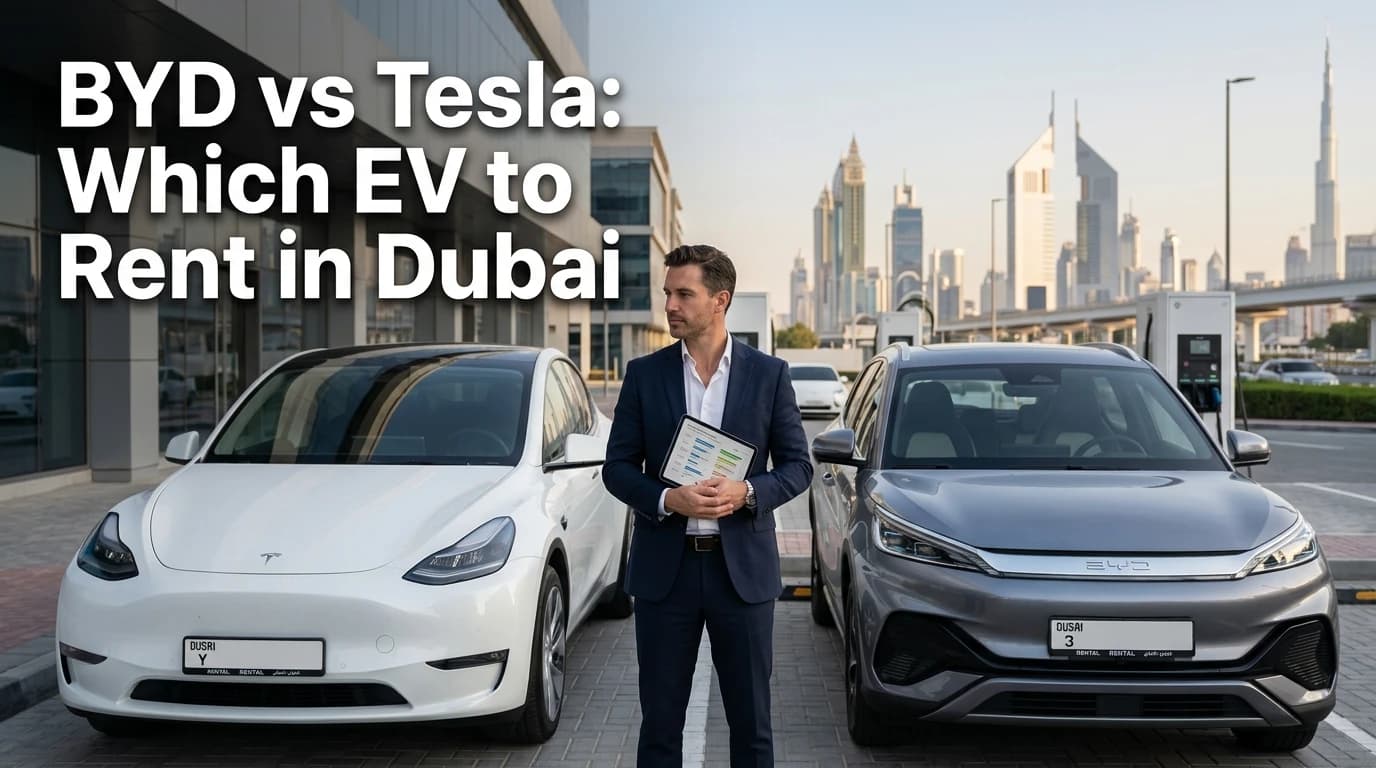
استئجار سيارة كهربائية في دبي كان يعني سابقًا تسلا أو لا شيء. تغيّر ذلك بسرعة. تحتل BYD اليوم مكانًا في معظم أساطيل التأجير إلى جانب موديل 3 وموديل Y، وغالبًا بسعر يومي أقل، ويستمر الزوار بسؤالنا عن أيهما يختارون. الإجابة الصريحة تعتمد على المكان الذي تنوي القيادة فيه ومدى ارتياحك للشحن بعيدًا عن المدينة. نقارن هنا الطرازات التي يمكنك استئجارها فعلاً هنا وفق ما يحدد مسار أي رحلة: المدى الفعلي في الحرارة، وأماكن الشحن المتاحة، والتكلفة، وشعور القيادة على مدى أسبوع كامل.
الطرازات التي ستُعرض عليك فعلاً
إذا دخلت أي شركة تأجير سيارات كهربائية في دبي، ستجد أن القائمة قصيرة. من جهة تسلا، لديك سيدان موديل 3 وسيارة كروس أوفر موديل Y. ومن جهة BYD، لديك Atto 3، وهي سيارة دفع رباعي مدمجة تُعد الأكثر مبيعًا، وسيدان Seal التي تنافس موديل 3 مباشرة، وسيارة الهاتشباك الأصغر Dolphin المخصصة للاستخدام المديني البحت.
إذن موديل 3 وSeal منافسان مباشران. أما موديل Y وAtto 3 فكلاهما يحمل تصنيف الدفع الرباعي، وإن كانت موديل Y أكبر وأسرع. وتبقى Dolphin في فئتها الخاصة كأرخص طريقة لتجربة سيارة كهربائية للتنقلات المدينية القصيرة.
المدى في حرارة 45 درجة
هذا هو الرقم الأهم في الصيف، وهو المكان الذي تضللك فيه الأرقام الرسمية. تُقاس أرقام مدى WLTP في ظروف أوروبية معتدلة. شهر يوليو في دبي ليس معتدلاً.
نظريًا، تدّعي تسلا موديل 3 Long Range مدى يتجاوز 600 كم بكثير. لكن في اختبار حرارة عند 44 درجة، سجلت نحو 390 كم فقط، أي أقل بنحو 44 بالمئة، ويعود ذلك جزئيًا إلى أن السقف الزجاجي الكبير يجبر المكيف على العمل بجهد أكبر. أرقام BYD تبدأ من مستوى أقل أصلاً. تُصنَّف Atto 3 بمدى يتراوح بين 345 و420 كم وفق معيار WLTP حسب حجم البطارية، وSeal بنحو 427 كم. إذا طبقت الخصم نفسه بسبب الحرارة، فستحصل واقعيًا على 250 إلى 300 كم في يوم حار مع تشغيل المكيف بأقصى طاقته.
ماذا يعني ذلك عمليًا؟ بالنسبة إلى القيادة داخل المدينة، من الفندق إلى المول إلى الشاطئ إلى العشاء، تستمر أي من هذه السيارات لأيام بين عمليات الشحن ولا يشكل المدى مشكلة. الفارق يظهر فقط في الرحلات الطويلة، مثل دبي أبوظبي ذهابًا وإيابًا، أو التوجه إلى الساحل الشرقي. في هذه الحالات، تمنحك تسلا Long Range أكبر هامش أمان حقيقي، ويجب أن تخطط لتوقف للشحن بدلًا من المراهنة على تقدير لوحة القيادة.
أين يمكنك الشحن
المدى ليس سوى نصف القصة. النصف الآخر هو مدى سهولة إعادة الشحن، وهنا لا تزال تسلا تتمتع بأفضلية حقيقية بالنسبة إلى الزوار.
تشغّل شبكة Tesla Supercharger في أنحاء الإمارات الآن محطات بكابل CCS2 واحد في دبي وأبوظبي والشارقة ورأس الخيمة والفجيرة وعلى طول الطرق السريعة الرئيسية. بالنسبة إلى موديل 3 أو موديل Y، تحدد السيارة المحطة بنفسها، وما عليك سوى التوصيل، وتتم الفوترة تلقائيًا عبر الحساب المرتبط بالسيارة المستأجرة. لا تطبيق، ولا بطاقة، ولا حاجة للتخمين إن كانت المحطة تعمل. في رحلة برية، تستحق هذه البساطة الكثير.
تستخدم سيارات BYD موصل CCS2 نفسه، لذا فهي تتوافق أيضًا مع الشبكة العامة الأوسع. في دبي، يعني ذلك في الغالب محطات EV Green Charger التابعة لديوا، التي توسعت لتبلغ آلاف النقاط في أنحاء المدينة. لا تزال محطات ديوا كثيرة مجانية، مع فئات مدفوعة تتراوح بين نحو 0.29 درهم لكل كيلوواط ساعة على الشاحن العادي وحتى نحو 0.55 درهم على الأسرع منها. المشغّلون الخاصون يتقاضون أكثر، بسعر يقارب 1.20 درهم لكل كيلوواط ساعة على الشحن السريع المستمر.
المشكلة في الشبكة العامة تكمن في التجربة وليس التغطية. قد تحتاج إلى إعداد تطبيق ديوا مسبقًا، وقد تكون بعض المحطات خارج الخدمة أحيانًا، وقد تشهد محطات الشحن السريع ازدحامًا في أوقات الذروة. كما يمكن لطرازات BYD الأحدث استخدام محطات Tesla Supercharger حيثما فُتحت أمام سيارات CCS2 الأخرى، ما يوسع خياراتها أكثر. للاستخدام المديني البحت، لا شيء من هذا يهم. أما بالنسبة إلى رحلة طويلة تريد أن تخوضها بثقة، فتبقى منظومة تسلا المغلقة الخيار الأسهل.
كم تدفع يوميًا
السعر هو النقطة التي تثبت فيها BYD جدارتها. الأسعار تتغير حسب الموسم والمورد، لذا تعامل مع هذه الأرقام كنطاقات تقريبية لا كأسعار ثابتة.
تُستأجر تسلا موديل 3 عادة بسعر يتراوح بين 150 و400 درهم يوميًا، ويعكس هذا التفاوت الفئة وسقف المسافة المقطوعة وحداثة السيارة. أما موديل Y الأكبر فسعرها أعلى، غالبًا من 350 درهمًا فأكثر، وصولًا إلى 1,000 درهم يوميًا في الحجوزات الفاخرة. عروض الأسبوع والشهر تخفض هذه الأسعار بشكل كبير، وعادة ما تكون حوالي 1,950 درهمًا للأسبوع و6,900 درهم للشهر في الفئة الاقتصادية.
تأتي BYD عادة بسعر أقل من نظيرتها في تسلا. تميل Atto 3 أو Seal إلى أن تكون بسعر يومي أقل بقليل من موديل 3 عند المقارنة المباشرة، وDolphin أرخص من ذلك. إذا كانت الميزانية هي العامل الحاسم وكانت قيادتك في الغالب داخل المدينة، تمنحك BYD تكاليف تشغيل كهربائية مماثلة بإيجار أقل.
أيًا كان اختيارك، تحقق من مبلغ التأمين والتحمّل (excess). فقد يكون وراء السعر المعلن الجذاب تجميد كبير على بطاقة الائتمان ومبلغ تحمّل مرتفع لا يظهر إلا في حال حدوث مشكلة. اقرأ هذا الجزء جيدًا قبل التوقيع.
المقصورة والتقنية والشعور بعد أسبوع من القيادة
تعتمد الماركتان على الفكرة الأساسية نفسها، شاشة لمس مركزية كبيرة وأزرار فعلية قليلة جدًا. لكن التنفيذ يختلف.
تضع تسلا كل شيء تقريبًا على شاشة واحدة، بما في ذلك عداد السرعة في موديل 3، وهو أمر يحتاج يومًا كاملاً للتعود عليه. البرمجيات هي الأكثر سلاسة في هذه الفئة، ونظام الملاحة يخطط محطات الشحن نيابة عنك، وتبدو المقصورة بسيطة إلى حد يحبه البعض ويجده آخرون قاسيًا. موديل Y يضيف مساحة سيارة دفع رباعي حقيقية وقيادة سريعة وثابتة.
تميل BYD إلى أجواء داخلية أكثر دفئًا. تتميز Atto 3 بمقصورة أكثر مرحًا مع شاشة دوّارة وخامات ملمسية، وتفاصيل بصرية أكثر مقارنة بلوحة القيادة المتقشفة في تسلا. أما Seal فتبدو أكثر نضجًا وهدوءًا. برمجيات BYD جيدة وتتحسن باستمرار، وإن كانت القوائم أكثر ازدحامًا وأقل بديهية عند أول استخدام. من ناحية راحة الركوب ومساحة المقصورة مقابل السعر، تمنحك BYD الكثير.
تسلا هي السيارة الأسهل التي يمكنك ببساطة الدخول إليها والوثوق بها على طرق غير مألوفة، وخصوصًا من ناحية الملاحة والشحن. أما BYD فتكافئ السائق الذي لا يمانع إعداد تطبيق وتصفح قائمة أو اثنتين.
الحكم النهائي، حسب ما تنوي فعله
لا يوجد فائز واحد مطلق، بل إجابة صحيحة لرحلتك تحديدًا.
- إذا كانت قيادتك في الغالب داخل المدينة وتريد أن تنفق أقل: استأجر BYD. تغطي Atto 3 أو Seal دبي بسهولة، وتُشحن على شبكة ديوا التي نادرًا ما ستنفد فيها الطاقة، وتكلف أقل يوميًا. Dolphin هي الخيار الاقتصادي.
- إذا كانت رحلاتك طويلة أو تريد صفر إزعاج في الشحن: استأجر تسلا، ويُفضل موديل 3 أو موديل Y Long Range. هامش المدى الإضافي مع شبكة Supercharger يجعلان الأميال خارج المدينة بلا أي متاعب.
- إذا كنت مع العائلة أو تحمل الكثير من الأمتعة في عطلة سياحية: اختر موديل Y للمساحة وأسلوب القيادة، أو Atto 3 للحصول على العملية نفسها لسيارة دفع رباعي بتكلفة أقل إذا بقيت غالبًا حول المدينة.
بالنسبة إلى معظم الزيارات القصيرة المتمركزة حول دبي مع رحلة نهارية بين الحين والآخر، فإن التأجير الكهربائي بمكيف قوي وخطة شحن واضحة هو الخيار السهل، ويمكنك استئجار تسلا أو BYD منّا في 24baba بما يناسب رحلتك وميزانيتك. طابق السيارة مع طبيعة قيادتك، لا مع اسم الماركة.
الأسئلة الشائعة — إجابات على الأسئلة المتكررة.
هل أحتاج إلى رخصة خاصة لاستئجار سيارة كهربائية في دبي؟
لا، تُستأجر السيارة الكهربائية بالشروط نفسها المطبقة على أي سيارة أخرى. بصفتك زائرًا، تحتاج عادة إلى رخصة قيادة سارية من بلدك بالإضافة إلى رخصة قيادة دولية، بينما يمكن لمواطني دول مجلس التعاون الخليجي استخدام رخصهم الخاصة. السيارة الكهربائية نفسها لا تضيف أي أوراق إضافية. فقط تأكد من أن الحجز يوضح ترتيبات الشحن قبل أن تنطلق.
هل شحن السيارة الكهربائية أرخص من تعبئة سيارة بنزين مستأجرة؟
نعم عادة، وخصوصًا على شبكة ديوا حيث لا تزال محطات عديدة مجانية أو بسعر يتراوح بين 0.29 و0.55 درهمًا لكل كيلوواط ساعة. وحتى في محطات الشحن السريع الخاصة بسعر يقارب 1.20 درهم لكل كيلوواط ساعة، فإن الشحن الكامل يكلف أقل بكثير من خزان بنزين للمسافة نفسها. يكون التوفير في أعلى مستوياته إذا اعتمدت على الشحن العام أو شحن الفنادق الأبطأ بدلًا من الاعتماد على أغلى محطات الشحن السريع المستمر.
هل يمكن لسيارة BYD استخدام محطات Tesla Supercharger في الإمارات؟
أحيانًا. تستخدم سيارات BYD موصل CCS2، وهو الموصل نفسه الذي تعتمده محطات Tesla Supercharger في الإمارات حاليًا، لذا يمكن لطرازات BYD الأحدث الشحن في محطات تسلا التي فُتحت أمام السيارات من ماركات أخرى. التغطية آخذة في التحسن لكنها ليست شاملة بعد، لذا يجب على سائق BYD أن يجهّز تطبيق ديوا كخيار الشحن الأساسي. أما تسلا، في المقابل، فتستخدم شبكة Supercharger بسلاسة تامة ودون أي إعداد مسبق.